



































1984 – The Birth: ‘New Technology Developer Inc.’

Lenovo was founded on 1 November 1984 in Beijing, China. The founding team consisted of eleven engineers from the Institute of Computer Technology at the Chinese Academy of Sciences, led by Liu Chuanzhi. The $25,000 in start-up capital was loaned by the Academy itself. Their first offices were a small guardhouse on the institution’s campus.
Their first business venture was a complete failure: they tried to import televisions and lost the money.
The real lifeline came when they realised there was a huge practical problem: IBM-compatible computers could not process Chinese characters. China has thousands of characters, and Western systems simply did not support them. Lenovo developed a circuit board that solved exactly that problem, and that gave them access to the entire Chinese market in one fell swoop.
With that money and credibility, in 1990 they launched their first PCs under their own brand. They no longer depended on distributing other people’s products; now they were manufacturing their own. It was a huge philosophical and strategic shift for a company barely six years old.
2005 – The company’s riskiest move
This was the moment that changed everything, and it deserves a detailed explanation because it was far more complicated than it seems.
In December 2004, Lenovo announced its intention to buy IBM’s Personal Systems Group for $1.3 billion in a share deal. The deal was ultimately valued at $1.75 billion and was finalised in May 2005.
Why did IBM want to sell? IBM’s PC business was facing significant challenges after the turn of the millennium. Increased competition and an increasingly saturated market meant that growth was slowing and margins were shrinking. IBM wanted to focus on high-margin services, consultancy and software, and PCs were a liability.
 For Lenovo, however, it was the opportunity of a lifetime. The deal made Lenovo the world’s third-largest PC manufacturer, propelling its revenue to over $12 billion and enabling it to expand into markets around the globe.
But the real challenge was not financial. It was cultural. IBM’s PC division was made up of long-serving employees who were reluctant to move to a relatively unknown Chinese company. The prevailing view was that IBM was handing over a declining business to an ambitious Chinese firm with no international experience.
To overcome this scepticism, Lenovo made some smart moves: it kept IBM’s executives in their posts, adopted English as the official corporate language, and moved its operational headquarters to Morrisville, North Carolina, where IBM’s PC division was based. They sent a clear signal that they weren’t going to tear down what they had bought.
The deal included the acquisition of the ThinkPad brand and a five-year licence to use the IBM name on its PCs. That licence was crucial: corporate customers buying ThinkPads weren’t buying an unknown Chinese brand; they were still buying something bearing the IBM name for five years – long enough for Lenovo to establish its own credibility.
ThinkPad: the crown jewel
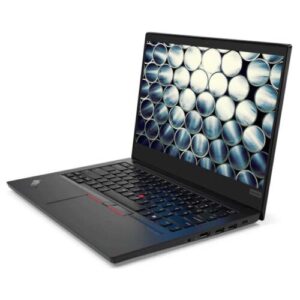
ThinkPad is a range of business-oriented laptops, known for their square, black design, inspired by a traditional Japanese lunchbox.
Its most famous hallmark is the TrackPoint: that little red dot in the middle of the keyboard that acts as a mouse. It’s controversial, but its fans love it.
The most celebrated models in the ThinkPad range over the years:
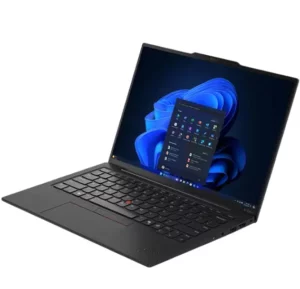
ThinkPad P is Lenovo’s range of mobile workstations, designed for professionals who need desktop-level power in a portable format. It features ISV-certified NVIDIA RTX GPUs (AutoCAD, SolidWorks, etc.), Xeon or Core i9/i7 processors, and high-colour-fidelity displays. It is the preferred choice of engineers, architects and content creators who need reliability and performance without compromise.
ThinkPad X1: It has been a constant benchmark in guides to the best business laptops, with unrivalled performance and connectivity. It is the model that has most defined what a premium professional ultraportable means: a carbon fibre chassis, all-day battery life, and a build quality that few can match.
ThinkPads pass MIL-STD durability tests (military standards for resilience), meaning they can withstand drops, vibrations, extreme temperatures and dust. When a field technician on a construction site needs a laptop that won’t break, they choose a ThinkPad.
2008 – IdeaPad: entering the consumer market
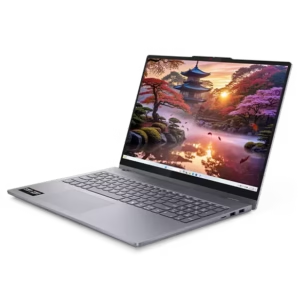
The IdeaPad range of consumer-oriented laptops was launched in January 2008. Here, Lenovo demonstrated that it had learnt a fundamental lesson about the market: it needed two brands with distinct personalities.
The IdeaPad was the complete opposite of the ThinkPad: colours, more modern designs, more affordable prices, and aimed at students and families. The IdeaPad is Lenovo’s budget and mid-range consumer line, offering a wide variety of affordable, well-built laptops to meet the needs of most users.
This segmentation was key. Lenovo did not try to make the ThinkPad do everything — they maintained the purity of each line and let each have its own identity.
2012 – Yoga: inventing a new category
The Yoga represented a major conceptual leap. In 2012, when iPad tablets threatened to take over the laptop market, Lenovo didn’t respond by making a tablet — it responded by making a laptop that was also a tablet.
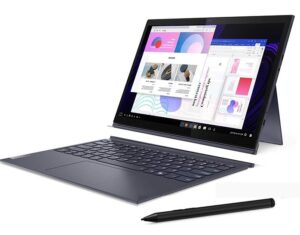
The Yoga’s 360-degree hinge allowed for four modes of use: laptop, tent, stand and tablet. It was a concept unlike anything else on the market. With its 2-in-1 functionality, you can use the device in laptop mode for work, in tent mode to watch your favourite series, or in tablet mode to relax.
The Yoga series is renowned for its PureSight OLED displays with infinite contrast, deep blacks and vibrant colours, with resolutions reaching up to 2.8K or 4K. And the battery of the Yoga 9i Aura Edition has exceeded 26 hours in battery life tests, which is exceptional.
The Yoga convinced many creative users that they didn’t need an iPad for drawing or taking notes — they could do it on their main Windows laptop.
2014 – Motorola and the mobile push
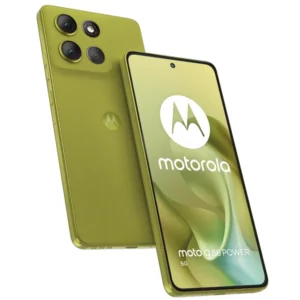
With its $2.91 billion acquisition of Motorola Mobility from Google, Lenovo sought to replicate IBM’s strategy: buying a brand with a rich history to break into a new market.
From 2014 onwards, Lenovo was the largest supplier of smartphones in mainland China. And Motorola gave them the leverage to target the global market, particularly in Latin America and Europe, where the American brand still enjoyed recognition.
The Moto G series became one of the world’s best-selling phones in the mid-range segment. The proposition was simple: decent specifications, low price, no bloatware. In emerging markets, it was a resounding success. The Moto G4 and G5 in particular were sales phenomena in countries such as Brazil, India and Spain.
The Motorola Razr is Motorola’s emotional product. Its hallmark is the clamshell form factor: it folds in half, takes up half the space in your pocket, and when you open it, it’s the size of a normal smartphone.
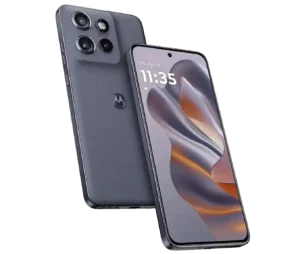
A Motorola Edge is a conventional flat-screen smartphone, focused on offering the best value for money in the mid-to-high range. Its proposition is straightforward: 144–165 Hz pOLED screens, well-engineered 50 MP cameras, large batteries with fast charging, almost stock Android without bloatware, and IP68 certification.
2016 – Legion: the gaming range is born
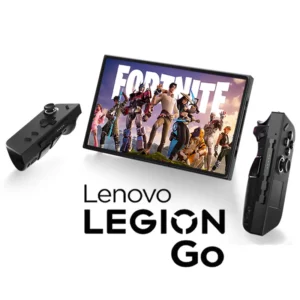
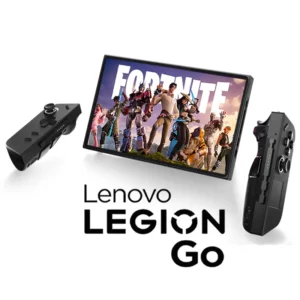
The Legion arrived at a time when gaming was no longer a niche market. Gamers needed serious hardware but didn’t want to pay workstation prices.
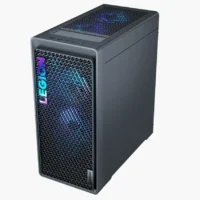
What set the Legion apart from the competition was primarily its cooling: Lenovo’s Coldfront system, which uses vapour chambers and optimised airflow, keeps temperatures under control even during long gaming sessions. The high-end models use liquid metal thermal compounds, which conduct heat more efficiently than standard thermal paste.
Lenovo News
Lenovo’s biggest venture right now isn’t a laptop or a server. It’s Qira.
 Lenovo Qira is a new personal AI super-agent known as the Personal Ambient Intelligence System, designed to provide greater continuity and context across the user’s devices. It aims to make everyday interactions feel more natural, helping users pick up where they left off, keep their work organised and switch seamlessly between PC, tablet and smartphone.
The central idea is that AI should not exist solely within an app, but should ‘envelop’ your entire ecosystem of devices. If you’re planning a trip on your PC and then pick up your mobile, Qira remembers the context and picks up where you left off. Through integrations with partners such as Expedia Group, Lenovo Qira is able to identify relevant information and facilitate a seamless transition between services when the user is ready to take action.
Qira will begin rolling out across various Lenovo and Motorola products throughout 2026, with the aim of facilitating the switch between computers, tablets and smartphones through device interconnectivity.
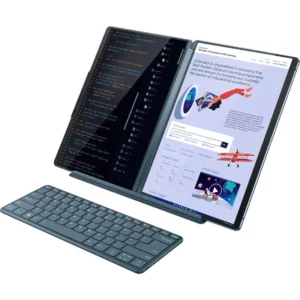
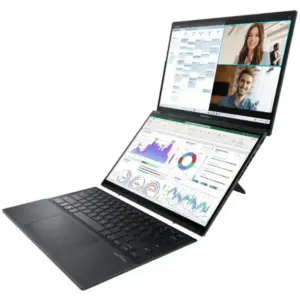
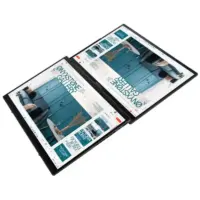
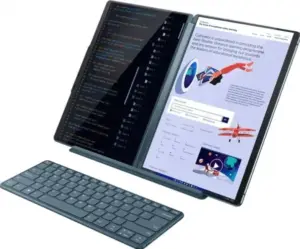
Yoga Book 9i Gen 9 (13″): An innovative laptop featuring two OLED touchscreens and an Intel Core Ultra processor. Designed for creativity and productivity, it is light enough to take on the go, with a focus on multitasking thanks to its dual-screen design.
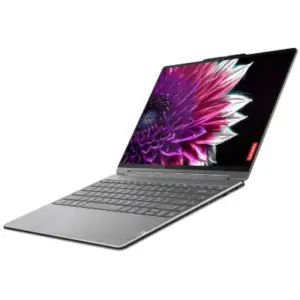
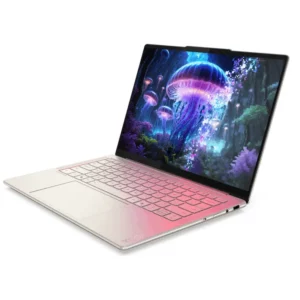
Yoga 9i 2-in-1 Aura Edition: Aimed at creative professionals, it features a 2.8K PureSight Pro OLED display that covers colour spaces such as DCI-P3, Adobe RGB and sRGB, and includes the Yoga Pen Gen 2 with AES 2.0 for greater precision. A feature called Canvas Mode allows the pen case to be attached to a rear magnet to tilt the screen and improve ergonomics when drawing.

Connect your Motorola to your PC via USB cable.
“ \r\n \r\n We will explain how to connect your Motorola mobile phone to your computer so that you can transfer files from your Motorola
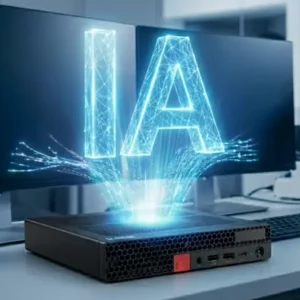
Advantages of Local Artificial Intelligence
Local AI: Regain Control, Eliminate Latency, and Protect Your Business If your company is using artificial intelligence exclusively in the cloud, you may be paying
Comparison of the Motorola Edge 70 range
Edge 70 Fusion Processor: Qualcomm Snapdragon 7s Gen 3 Screen: 6.78″ AMOLED, 144 Hz, 5200 nits Battery5200 mAh (7000 mAh optional in some markets) LoadingTurboPower