

















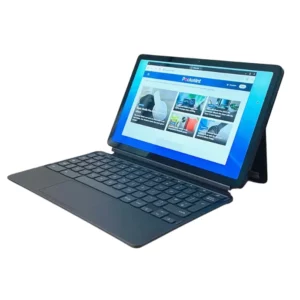






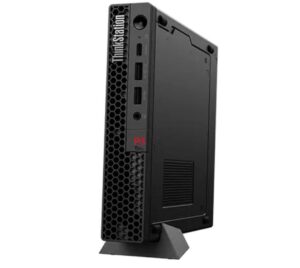


































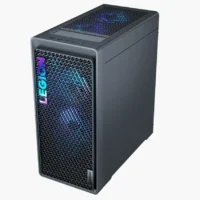

Radical Privacy for your business and home.
When you send a confidential document to an AI assistant in the cloud, do you really know where it will end up?
The most immediate advantage of local AI is… data sovereignty. In a local setting:
Data doesn’t travel. Your customer information, product plans, and financial strategies are processed within your infrastructure.
Compliance guaranteed. Sectors such as healthcare, banking, or the legal field no longer face as many difficulties in complying with regulations like the GDPR or the LOPDGDD. If the data doesn’t leave the network, the risk of data breaches is drastically reduced.
Instant Speed: Goodbye to Latency
Have you noticed that small pause while the AI ”thinks”? That fraction of a second is the time it takes for your data to travel to a data center, be processed, and return.
In critical applications, this wait is unacceptable:
Industry 4.0: An assembly line cannot stop because the internet connection failed.
Medical care: An assisted diagnosis in an operating room needs to be instantaneous.
Autonomous vehicles or surveillance: Making decisions in milliseconds is a matter of safety.
Technological Sovereignty
We have already witnessed massive outages of AI services in the cloud that paralyzed entire companies. Services cannot be interrupted due to the fault of third parties.
Local AI offers independence. Your operation doesn’t depend on the stability of a third party or the ups and downs of the API market. You own your technological destiny.
Strategic Investment
The “token” or “query” payment model is perfect for starting out, but lethal at scale.
Let’s imagine a company that integrates AI into its customer service or document review. With external APIs, costs grow linearly with the company’s success.. The more you use AI, the more you pay.
Local AI transforms this model:
CAPEX vs. OPEX: You invest in hardware (servers with GPUs or NPUs) that will be yours forever.
Eliminating recurring costs: Once implemented, the marginal cost per query tends towards zero.
Bandwidth savings: Processing terabytes of sensor data or videos locally avoids the costs of transferring them to the cloud.

Claude, from Anthropic, is an advanced language model that stands out for its safety, ethical alignment, and the ability to reason through complex situations.. Ideal for businesses, it allows you to generate content, summarize documents, or automate conversations, while maintaining… data privacy and reducing the risk of inappropriate responses.
Paid versions, such as OpusThese are the most profitable due to their power and assistance in business projects and coding.
LLaMA: Independent, advanced, and flexible.

Llama 3 is one of the most advanced artificial intelligence models that can be used locally today. Developed by Goal, is designed for companies that need Power, privacy, and complete control over your data. Llama 3 stands out for its ability to understand and generate text in a very natural way, with a very high level of accuracy and consistency.
Its biggest advantage is accessibility: any company, startup, or programmer can use, modify, and integrate it without the prohibitive costs of proprietary models.
It surpasses in benchmarks Competitors like Claude 3 or ChatGPT.
OpenClaw: Scalability and easy implementation

OpenClaw is a personal AI assistant that runs on your own devices. It connects messaging services with AI coding agents through a gateway. centralized. OpenClaw is an excellent alternative for those looking for sovereignty and flexibility.
Security is an area they continue to improve, adding layers that protect different skills, as they recently did by collaborating with… VirusTotal.